
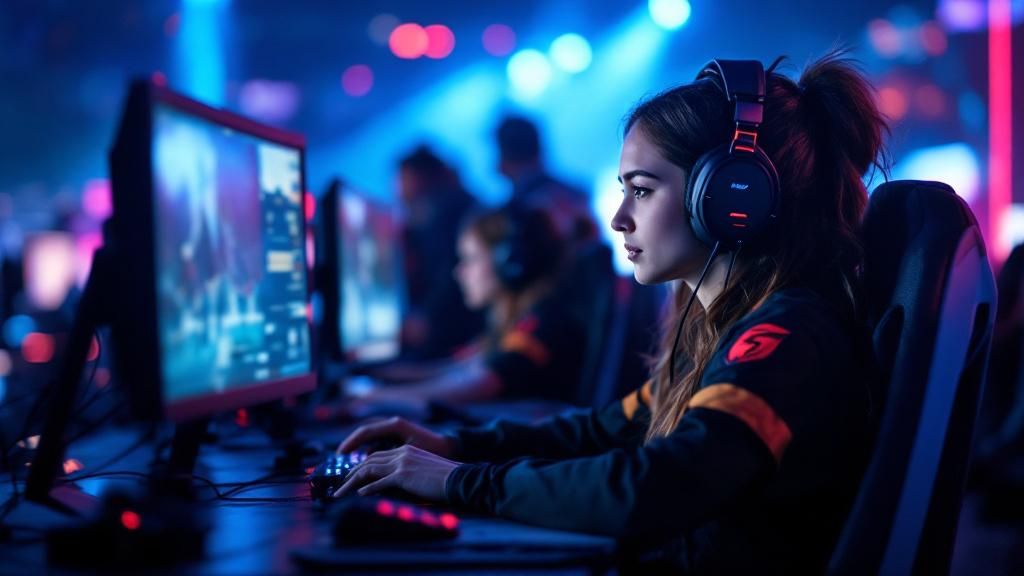
The esports industry has undergone a dramatic shift as female athletes break established records in both tournament viewership and lucrative sponsorship agreements. Once relegated to the periphery of competitive gaming, women gamers are now commanding mainstream attention and commanding considerable financial backing from top-tier global brands. This article examines the remarkable rise of female competitive gamers, examining the factors spurring exceptional competitive interest and commercial backing, whilst charting the trajectory of an industry finally recognising the financial and competitive prowess of its female competitors.
Record-Breaking Audience Figures
The surge in female esports competitor recognition has resulted in record audience figures across top-tier events. Latest tournaments highlighting notable female competitors have drawn audiences surpassing five million simultaneous viewers, a significant milestone that rivals conventional sports. These statistics demonstrate a significant growth from prior seasons, proving that audiences are more engaged with watching professional female competitors perform at elite standards. Tournament organisers have indicated that competitions featuring female players steadily attain greater audience engagement, with online engagement and broadcast audience numbers hitting record highs.
Industry analysts attribute this viewership explosion to several converging factors, including enhanced media coverage, better digital accessibility, and increased acknowledgment of female athletes’ outstanding performance levels. Leading broadcast networks have begun investing in specialist gaming programming, providing female competitors the visibility they previously were denied. Furthermore, commercial partnerships have enabled better production quality and marketing campaigns, establishing a positive feedback loop of greater visibility and viewer engagement. This trajectory suggests that unprecedented audience figures are unlikely to be temporary phenomena, but rather indicative of a significant change in how audiences interact and connect with professional gaming.
Sponsorship Agreements and Commercial Development
The business environment of esports has experienced significant transformation, with female athletes securing sponsorship deals of remarkable magnitude and status. Major multinational corporations, including technology giants and lifestyle brands, have acknowledged the considerable commercial potential of female esports competitors. These partnerships go further than traditional gaming peripherals, encompassing fashion collaborations, energy drink endorsements, and automotive partnerships. The financial commitments from sponsors have reached record-breaking figures, with some individual athletes obtaining multi-million pound agreements that rival their male counterparts, substantially transforming perceptions of female gaming’s commercial viability and audience appeal.
This commercial growth reflects broader market dynamics, as brands recognise the significance of the demographic range and purchasing power of female esports audiences. Sponsorship growth has catalysed infrastructure developments, enabling female athletes to access premier training facilities, nutritional support, and expert mentorship. The influx of corporate investment has at the same time elevated competitive standards and established as a professional industry the sector, creating sustainable career pathways for aspiring female gamers. Consequently, sponsorship deals have evolved past straightforward commercial exchanges, becoming instrumental catalysts for systemic change within esports organisations and fostering real investment in gender inclusivity at all competitive levels.
Impact on the Esports Market
The notable growth of female participation in esports has significantly altered the gaming competition sector. Leading tournament operators have witnessed substantial increases in audience numbers, with women-focused tournaments attracting millions of global viewers. This growth has driven sector participants to allocate considerable funding in training infrastructure, competition venues, and organised league frameworks intentionally developed to nurture female talent. Consequently, esports has transformed from a limited entertainment market into a widely recognised cultural event, matching conventional athletic competitions in audience engagement and commercial viability.
Sponsorship patterns within the esports ecosystem have undergone significant change following women athletes’ landmark accomplishments. International companies, acknowledging the business opportunities and audience reach of female gamers, have substantially increased their financial commitments to women’s tournaments and individual athletes. This surge in funding has established sustainable career pathways for emerging women professionals, enabling them to perform at the highest standard without economic strain. The resulting economic stability has attracted larger pools of talent, creating a positive feedback loop of enhanced competitive standards and increased fan engagement.
Looking ahead, the esports industry stands poised for continued evolution propelled by female athletes’ remarkable success. Industry analysts project sustained growth in both viewership metrics and sponsorship valuations, with female-focused competitions securing premium advertising rates. This trajectory suggests a future wherein gender parity becomes the industry standard rather than an aspirational goal. The achievements of contemporary female esports athletes have fundamentally transformed the sector’s trajectory, setting new benchmarks for inclusivity and commercial success.
